
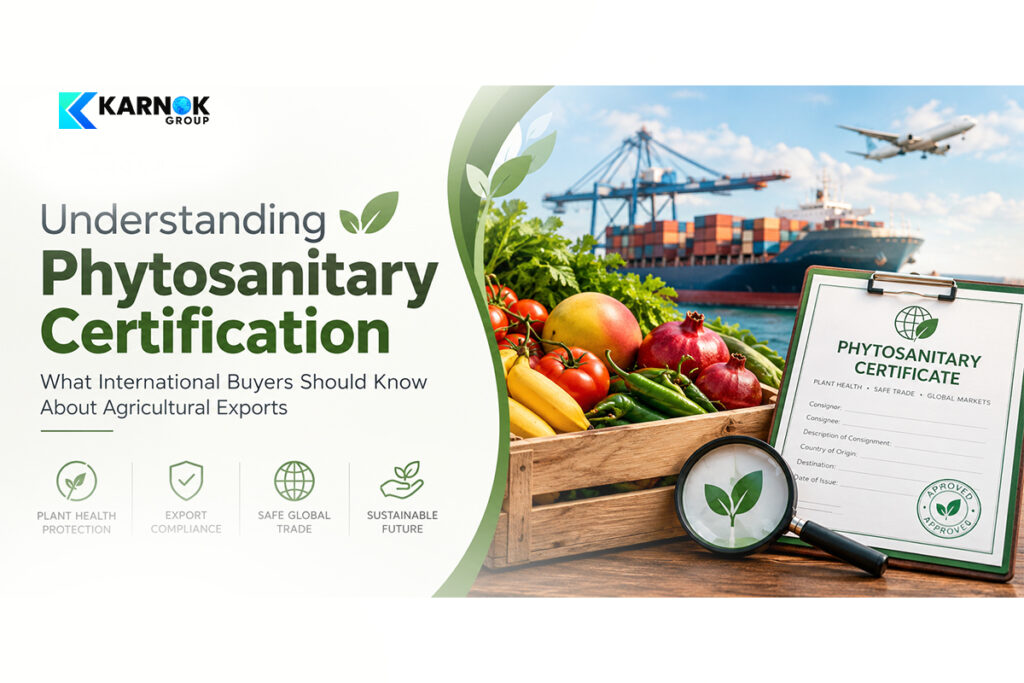
When fresh fruits, vegetables, seeds, plants, and other regulated agricultural products move between countries, protecting plant health becomes an important part of international trade.
An agricultural shipment may travel thousands of kilometres before reaching its destination. During this journey, there is a potential risk that pests or plant diseases could move from one country to another through regulated plant products.
This is where phytosanitary certification becomes important.
For exporters and international buyers, understanding phytosanitary requirements can help make agricultural shipments more predictable, compliant, and easier to manage.
In this guide, we explain what a phytosanitary certificate is, why it is required, how it fits into the export process, and what buyers sourcing agricultural products from India should understand.
Important: Phytosanitary requirements vary according to the commodity and importing country. Exporters and importers should always verify the current requirements applicable to their specific shipment.
What Is a Phytosanitary Certificate?
A phytosanitary certificate is an official document used in international trade to attest that a consignment of plants, plant products, or other regulated articles meets the applicable phytosanitary import requirements of the destination country.
Under the International Plant Protection Convention (IPPC), phytosanitary certification is part of the international system designed to prevent the introduction and spread of plant pests through trade.
In simple terms:
A phytosanitary certificate provides official plant-health certification for an eligible export consignment.
It is not simply a general quality certificate. Its purpose is specifically related to plant health and phytosanitary requirements.
Why Is Phytosanitary Certification Important?
Countries establish plant-health requirements to reduce the risk of introducing harmful pests and diseases through international trade.
The IPPC provides the international framework for plant-health protection, while individual countries establish and administer their own applicable requirements through their national plant protection systems.
For agricultural exporters, phytosanitary certification can therefore be an important part of accessing international markets.
It helps support:
- Plant-health protection
- Safe international movement of plant products
- Compliance with importing-country requirements
- More predictable export procedures
- Protection against the spread of regulated pests
For buyers, appropriate certification can also be an important component of the import process.
Who Issues a Phytosanitary Certificate?
A phytosanitary certificate is issued by the National Plant Protection Organization (NPPO) of the exporting or re-exporting country, through an authorized official.
The IPPC’s ISPM 12 explains that phytosanitary certificates are issued by the NPPO and that certification is undertaken to attest that consignments meet the phytosanitary import requirements of the importing country.
In India, phytosanitary certification is part of the functions of the Directorate of Plant Protection, Quarantine & Storage (DPPQ&S), which undertakes phytosanitary certification and supports export market access from a plant-health perspective.
This distinction is important:
An exporter may coordinate the certification process, but the phytosanitary certificate itself is an official plant-health certification issued through the authorized government system.
What Does a Phytosanitary Certificate Cover?
The certificate is intended to identify the relevant consignment and provide the applicable phytosanitary certification information.
The model certificate includes information such as:
- Exporter
- Consignee
- Number and description of packages
- Place of origin
- Means of conveyance
- Point of entry
- Name and quantity of produce
- Botanical name where applicable
- Additional declarations
- Treatment information where applicable
The certificate also contains the official certification statement and is completed by the authorized plant protection authority.
The exact information and declarations required can depend on the importing country’s regulations and the specific commodity.
Phytosanitary Certificate vs. Quality Certificate
These two concepts should not be confused.
A phytosanitary certificate primarily addresses plant-health requirements.
A quality specification, inspection report, commercial specification, or other certificate may address different aspects of a shipment.
For example, a buyer may have requirements relating to:
- Size
- Variety
- Appearance
- Grade
- Packaging
- Quantity
- Commercial specifications
These requirements are separate from the phytosanitary purpose of the certificate.
An agricultural export shipment can therefore involve multiple compliance and commercial requirements, depending on the product and destination.
How Does the Phytosanitary Certification Process Work?
The exact process can differ depending on the commodity, destination, and applicable regulations.
However, from an export-planning perspective, the process can broadly be understood as follows:
1. Identify the Destination Requirements
The exporter first needs to understand the phytosanitary requirements applicable in the destination market.
These requirements can vary by:
- Country
- Commodity
- Origin
- Intended use
- Pest risks
- Import regulations
This is why exporters should not assume that the requirements for one market automatically apply to another.
2. Confirm the Product and Shipment Details
The exporter needs accurate information about the shipment.
This may include:
- Product name
- Quantity
- Packaging
- Country of origin
- Destination
- Consignee
- Transportation details
Accurate information is important because the certificate must correspond to the relevant consignment.
3. Meet Applicable Phytosanitary Requirements
Depending on the destination and commodity, the importing country may specify particular phytosanitary conditions.
These can include inspection, treatment, additional declarations, or other measures.
The exporter must ensure that the shipment satisfies the applicable requirements before certification.
4. Inspection or Verification Where Required
The relevant plant protection authority may conduct inspection or other official verification procedures as required.
The IPPC’s standards include guidance for inspection of consignments of plants, plant products, and other regulated articles, including visual examination and documentary, identity, and integrity checks.
The exact procedure depends on the applicable regulatory framework.
5. Certificate Issuance
Once the applicable requirements have been met, the authorized plant protection authority can issue the phytosanitary certificate in accordance with the relevant procedures.
The certificate then accompanies or is electronically associated with the shipment as required by the applicable system.
The IPPC also supports ePhyto, which enables countries to exchange phytosanitary information electronically.
What Are Additional Declarations?
Some importing countries may require specific additional declarations relating to their phytosanitary import requirements.
These declarations can address specific pest or plant-health conditions that must be satisfied for a particular commodity and destination.
They should not be treated as generic statements that can simply be copied from one shipment to another.
Instead, the applicable declaration should be based on the importing country’s current requirements and the relevant certification process.
This is one reason why experienced export coordination is valuable when dealing with agricultural shipments.
Does Every Agricultural Shipment Require a Phytosanitary Certificate?
Not necessarily.
Whether a phytosanitary certificate is required depends on factors including:
- The commodity
- The destination country
- The importing country’s regulations
- The intended use
- The applicable phytosanitary requirements
Therefore, exporters should not assume that every agricultural product automatically requires the same documentation.
For example, the requirements applicable to fresh mangoes may differ from those applicable to processed agricultural products or other commodities.
The correct approach is to verify the requirements for the specific product and destination before shipment.
Why Importers Should Pay Attention to Phytosanitary Requirements
For international buyers, phytosanitary compliance should be considered before placing an order—not after the shipment has already been prepared.
An importer should understand the plant-health requirements applicable to the product they intend to bring into their country.
This can help the buyer and exporter coordinate:
- Product specifications
- Required declarations
- Inspection requirements
- Treatment requirements, where applicable
- Documentation
- Shipment timing
Early coordination can reduce the risk of avoidable documentation or compliance problems.
Phytosanitary Certification and Fresh Fruit & Vegetable Exports
Phytosanitary considerations can be particularly relevant to fresh agricultural trade because fruits and vegetables are plant products moving across international borders.
For an exporter supplying products such as:
- Mangoes
- Bananas
- Pomegranates
- Onions
- Tomatoes
- Garlic
- Green chillies
the applicable requirements need to be considered according to the destination market and the specific product.
A reliable exporter should therefore discuss the buyer’s destination and requirements before finalizing an export shipment.
Common Mistakes Buyers and Exporters Should Avoid
1. Assuming One Certificate Requirement Applies Everywhere
Different countries can have different plant-health requirements.
Better approach: Check the current destination-specific requirements.
2. Treating Phytosanitary Certification as a General Quality Certificate
The certificate has a specific plant-health purpose.
Better approach: Understand how phytosanitary documentation fits alongside other commercial and regulatory documents.
3. Checking Requirements Too Late
Discovering a special requirement immediately before shipment can create unnecessary complications.
Better approach: Review applicable requirements during the quotation and order-planning stage.
4. Using Incorrect Shipment Information
Certificate information needs to correspond with the relevant consignment.
Better approach: Ensure product, quantity, exporter, consignee, and shipment details are accurately coordinated.
5. Assuming the Exporter Alone Determines the Requirements
The importing country’s requirements are critical.
Better approach: Both buyer and exporter should communicate clearly about the destination-market requirements.
Phytosanitary Certification Is Part of a Larger Export Process
A phytosanitary certificate is only one component of a fresh produce export operation.
A typical export journey may involve:
Sourcing → Harvesting → Sorting → Grading → Quality Checks → Packaging → Documentation → Phytosanitary Certification → Transportation → Port → International Shipment
Each stage contributes to the overall success of the shipment.
This is why international agricultural exporting requires coordination across the entire supply chain.
How Karnok Group Approaches Export Compliance
At Karnok Group, we understand that supplying agricultural products to international buyers involves more than sourcing and packaging produce.
Export requirements need to be considered according to the product, destination, and buyer’s specifications.
Our focus is on coordinating the export process—from sourcing and product preparation through packaging, documentation, logistics, and shipment coordination.
For international buyers, our objective is to provide clear communication around the requirements of each order and support a structured export process.
Our product range includes fresh fruits, vegetables, and spices such as mangoes, bananas, pomegranates, onions, tomatoes, garlic, green chillies, red chillies, turmeric, and coriander.
If you are sourcing agricultural products from India, we recommend discussing your destination country, product, quantity, packaging requirements, and applicable import requirements with us before confirming your shipment.
Frequently Asked Questions
What is a phytosanitary certificate?
A phytosanitary certificate is an official plant-health document used for eligible consignments of plants, plant products, and other regulated articles. It certifies that the consignment meets the applicable phytosanitary import requirements of the destination country.
Who issues a phytosanitary certificate in India?
Phytosanitary certification is undertaken through India’s plant protection and quarantine system, under the Directorate of Plant Protection, Quarantine & Storage and its authorized officers.
Is a phytosanitary certificate the same as a quality certificate?
No. A phytosanitary certificate concerns plant-health requirements. Commercial quality specifications and other certificates address different aspects of an export shipment.
Does every fruit and vegetable shipment require one?
Not necessarily. Requirements depend on the product, destination country, and applicable import regulations. Always verify the requirements for the specific shipment.
Why is phytosanitary certification important?
It helps countries manage the risk of introducing and spreading regulated plant pests through international trade and supports compliance with applicable plant-health requirements.
Final Thoughts
Phytosanitary certification may appear to be just another export document, but it plays an important role in international agricultural trade.
It is part of a broader plant-health system designed to help countries protect their agricultural resources while facilitating safe international trade.
For exporters, understanding destination-specific phytosanitary requirements early can help improve shipment planning.
For importers, discussing these requirements with the exporter before placing an order can help create a smoother and more predictable sourcing process.
At Karnok Group, we believe that successful agricultural exports depend on quality products, responsible sourcing, proper documentation, and clear communication from farm to international market.
Looking to Source Agricultural Products From India?
If you are an importer, wholesaler, distributor, or food business looking for fresh fruits, vegetables, or spices from India, contact Karnok Group to discuss your product and destination requirements.
[Request a Quote →]